

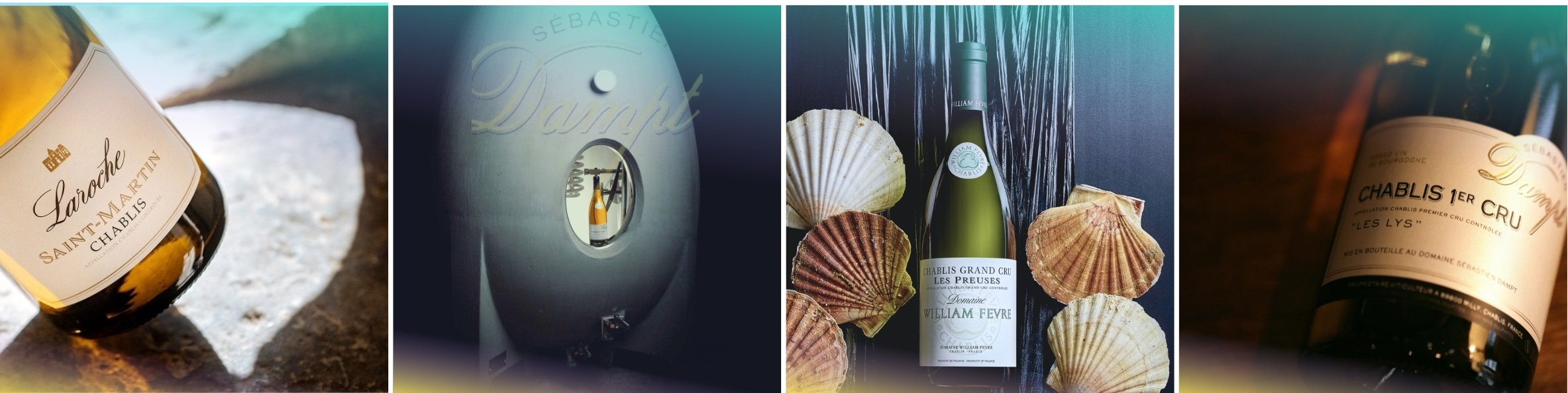
Five producers, twelve Chablis,
from Petit Chablis to Grand Cru.
Dampt, Mosnier, Moreau, Fèvre, Laroche
Twelve wines in four brackets, climbing the Chablis ladder one rung at a time:
Petit Chablis, village Chablis, Premier Cru, then Grand Cru, finishing with a 2013 William Fèvre Les Clos from the museum.
Chablis Showcase:
Fèvre, Laroche, Dampt, Mosnier & Moreau
Saturday, October 17th
Hosted by JJ (John Jens)
Lunch: 12–2.30pm | 12 wines and 4 courses | $145
Masterclass: 3–5pm | 12 wines & canapés | $85
Twelve wines, five producers and all four levels of Chablis.
Every wine in this tasting is Chardonnay. We’ll start with Petit Chablis, move through Chablis and Premier Cru, then finish with three Grand Crus, comparing the vineyards, producers and vintages along the way.
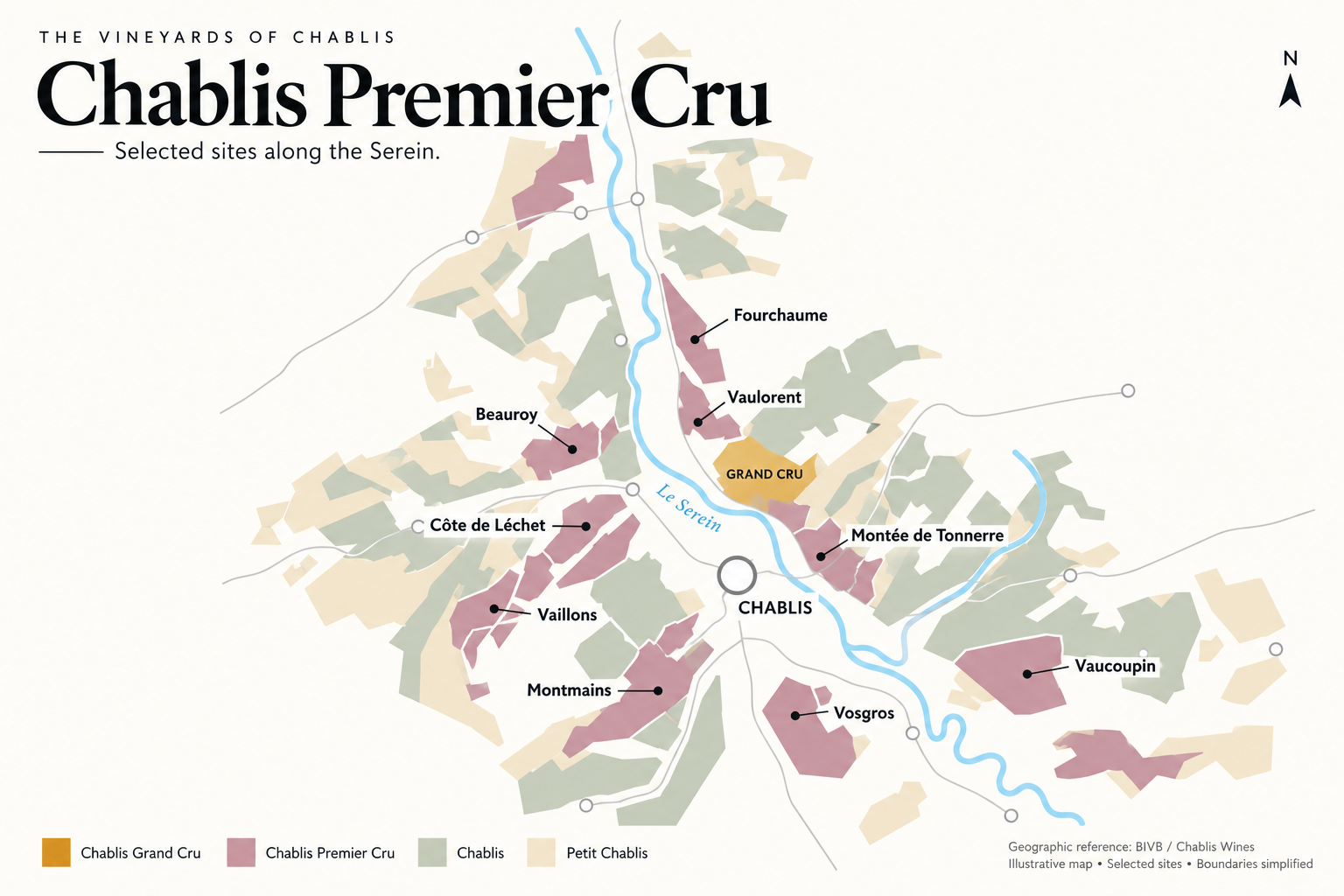
In Chablis, a higher position on the hill doesn’t mean a higher classification. Petit Chablis often grows on the plateaus above the more prestigious vineyards. What matters is the ground beneath the vines and how the slope catches the sun.
Much of Chablis, Premier Cru and Grand Cru sits on Kimmeridgian limestone and clay containing fossilised oyster shells; Petit Chablis generally grows on younger limestone. Even neighbouring vineyards can differ in soil depth, drainage and exposure, affecting ripeness, acidity and the weight of the wine.
The producers bring their own decisions to that landscape. Sébastien Dampt uses stainless steel and concrete rather than barrels, so his wines offer a useful starting point for looking at vineyard character without oak flavour. Stéphanie Mosnier makes the wines at her family’s domaine utilising barrels, while Fabien Moreau farms organically and uses barrels for select parts of his range.
The Producer Overviews
-
Milly, Chablis · Estate founded 2007 · Around 6 hectares
Part of a Chablis family that goes back around 150 years, Sébastien worked alongside his father Daniel and brother Vincent from 2005 before setting up his own estate in Milly in 2007. Everything is made in stainless steel, apart from his 1er Cru Les Beugnons, which ferments in a concrete egg. He is one of only two producers bottling Beugnons, first made in 2013, and his Vaillons comes from 60-year-old vines.
-
Beine, Chablis · Family estate since 1978 · Unoaked
Sylvain, a motor mechanic by trade, started making wine in 1978 when his wife inherited her family’s vines in Beine. Quality stepped up when their daughter Stéphanie came home from winemaking school, and she now runs the estate with Christophe Mosnier. The wines are unoaked, fresh and citrus-led, and the estate has long been one of our favourite value producers in Chablis. Holdings include 1er Cru Beauroy and Côte de Léchet.
-
Chablis · Domaine founded 2001 · Around 12 hectares, organic
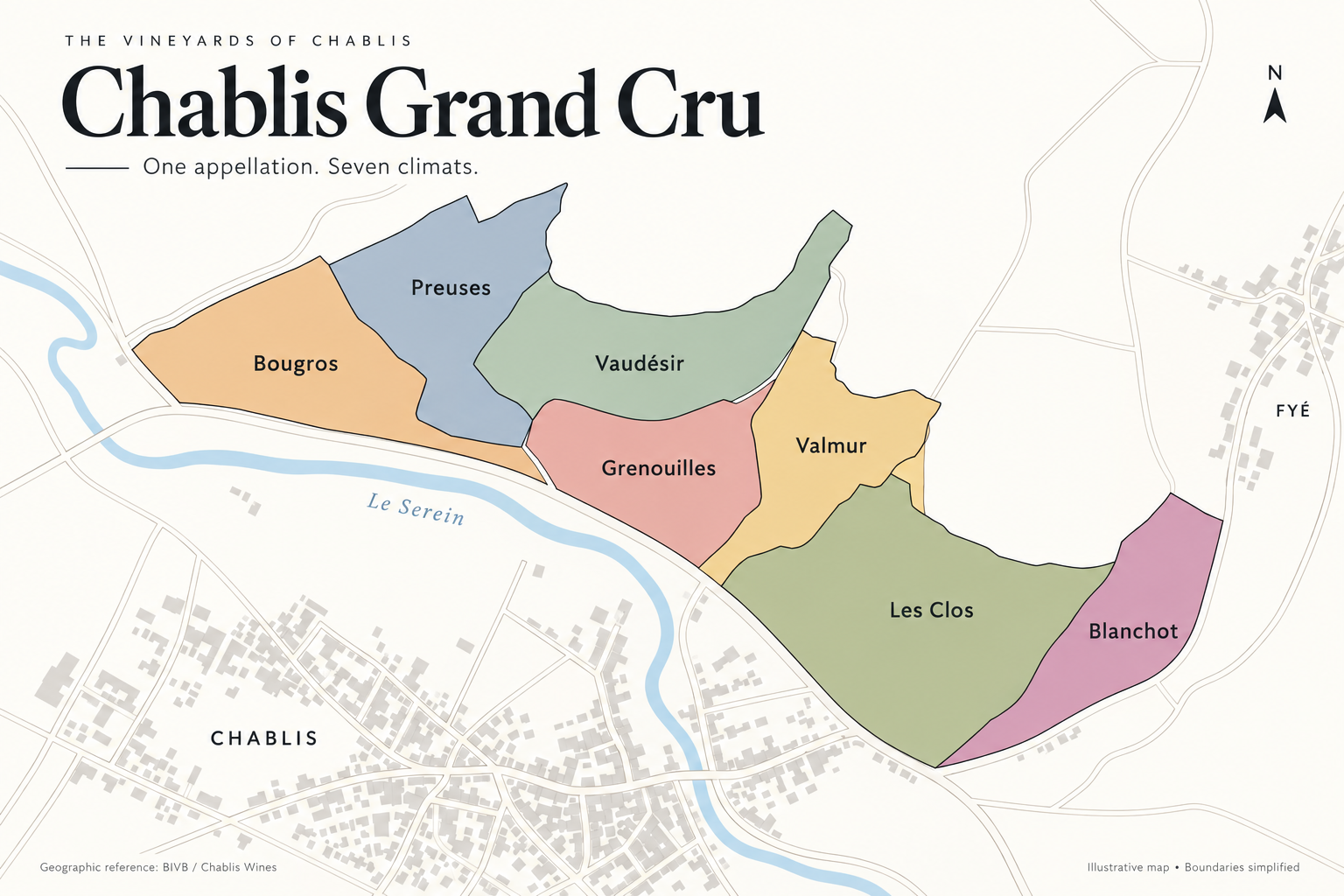
The Moreau family founded J. Moreau & Fils in 1814 and sold it from 1974. Christian used a clause in the sale to reclaim the family vines and launched this domaine in 2001. His son Fabien, the sixth generation, has made the wines since 2002 and converted the estate to organics. The holdings run through Les Clos, the Clos des Hospices monopole, Blanchot, Valmur, Vaudésir and 1er Cru Vaillons, with under ten per cent new oak.
-
Chablis · Founded 1959 · 15.2 hectares of Grand Cru
Founded by William Fèvre in 1959 and owned by Henriot since 1998, this is the largest Grand Cru owner in Chablis, with holdings across six of the seven Grand Crus and Les Clos as its flagship. Winemaker Didier Séguier, formerly of Bouchard, has made it a benchmark for terroir-driven Chablis. The estate’s 78 hectares were fully organic by 2023, and the Grand Crus see 70 to 80 per cent barrel with no new oak.
-
Chablis · Founded 1850 · Around 100 hectares
Built into a 100 hectare estate by Michel Laroche and now part of the Advini group, Laroche is based in the Obédiencerie, a 15th-century building in the town of Chablis. It holds 5.78 hectares of Grand Cru across Blanchots, Les Bouguerots and Les Clos, and uses tank, foudre and barrel depending on the cuvée. Les Bouguerots is the steep Grand Cru slope at the western end of Bougros.
The Wine List
First Bracket · Petit Chablis
2023 Sébastien Dampt Petit Chablis
Overview
Sébastien comes from a family that has made wine around Chablis for some 150 years, and since founding his own Milly estate in 2007 he has worked every cuvée in stainless steel only. His Petit Chablis is that philosophy at its most direct: young vines on the high Portlandian limestone plateaux around Milly and Fyé, with nothing between the stone and the glass. The domaine describes marine notes lifting intense lemony aromas, a vibrant mineral palate and a clean, well-balanced finish. 2023 was a generous, early-drinking vintage that suits Petit Chablis, so this is drinking beautifully now.
2025 William Fèvre Petit Chablis
Overview
Since Henriot bought the domaine in 1998, Didier Séguier has made Fèvre a benchmark for terroir-focused Chablis: the 78 ha estate is fully organic and he avoids new oak even in the Grands Crus, so the vineyard does the talking. The Petit Chablis gets the same care, with pear, lime and green apple over oyster-shell and slatey minerality, brisk acidity and a gently rounded feel. 2025 brought no spring frost or summer hail; and growers describe the wines as concentrated and balanced, with good freshness.
2025 Christian Moreau Petit Chablis
Overview
The Moreau family has made Chablis since 1814, and sixth-generation Fabien, at the helm since 2002, aims for “a wine of great pureness which is typical of Chablis”: organic farming, under 10% new oak and barrels reused for up to seven years. His Petit Chablis has an unusual address for the appellation, at the top of the Grand Cru hill metres from Valmur, plus a small 0.4 ha parcel above Vaudésir, so it carries a touch of Grand Cru pedigree at the entry level. 2025 also marks its return, after the domaine made no Petit Chablis in 2024 because of severe crop losses.
——————
Second Bracket · Chablis
2024 Sébastien Dampt Chablis
Charles Curtis MW, Decanter
Classic, a bit closed on the initial attack but opens up on the palate with hints of nectarine, peach and white flowers. The harmony of fresh, crisp acidity and moderate body suggests this will please on release. The grapes are a blend of five parcels, all in Milly totalling 5ha, fermented and aged in tank before bottling. Drink 2026–2031.
2023 Sylvain Mosnier Chablis
James Suckling, jamessuckling.com
A textured, balanced and vivid Chablis with aromas of apples, fresh lemons and some linden. Medium-bodied with bright acidity. Precise and lively, with a succulent expression in the mouthwatering finish. Drink or hold.
2025 Christian Moreau Chablis
Neal Martin, Vinous
The 2025 Chablis Village, which comes from purchased fruit, has a well-defined nose with citrus peel and subtle leesy scents, a touch of sea spray in the background. The palate has commendable weight, a little spicier than expected, with hints of mango and apricot furnishing the finish. This has an easy-going quality to it.
——————
Third Bracket · Premier Cru
2024 Sébastien Dampt 1er Cru Les Beugnons
Jasper Morris MW, Inside Burgundy
Made in cement egg, which takes longer to ferment and does it at a more even temperature. Bottled last week Pale lemon and lime. The fruit is more generous than the Vaillons bottling. Beugnons is less stony than other sectors of the valley. There is an admirable fresh fruit intensity at the back with a lemon rinse. Drink from 2028–2033. Tasted Jun 2025.
2023 Sylvain Mosnier 1er Cru Beauroy
James Suckling, jamessuckling.com
A solid, precise, vivid and succulent chardonnay with aromas of sliced apples, white peaches, warm spices and some wild herbs. Medium-bodied with fresh acidity. A juicy center palate with plenty of drive and focus. Flavorful and seductive. Drink or hold.
2025 Christian Moreau 1er Cru Vaillons
Neal Martin, Vinous
The 2025 Chablis Vaillon 1er Cru has a strict nose with touches of yellow fruit mixed with crushed stone and green apple. It gradually unfurls but keeps its foot on the brakes. The palate is well-balanced with a peachy opening. Drink 2027–2036.
——————
Fourth Bracket · Grand Cru
2024 Christian Moreau Grand Cru
Jasper Morris MW, insideburgundy.com
32 hl from 5ha, all in wood, none new, but now racked to tank. A fresh pale yellow colour with a green tint. The oak is quite evident on the nose, but in harmony with the fruit. There is a sensual aspect to this, backed by substantial salinity, as ripening was blocked to some extent. The final result is pleasing, with a little lemony touch. Building in density during the elevage, and will not be bottled until next spring.
2021 Domaine Laroche Les Bouguerots Grand Cru
Jasper Morris MW, insideburgundy.com
On the steep slope, planted at 10,000 vines per hectare and picked early. Paler in colour, not quite clear, an interesting mix of fruit on the nose including grapefruit. Has kept a clean crisp definition, then fleshes out more behind. But this is not a fat and spicy style. There is some backbone here and a little tannin. Drink from 2026–2032. Tasted Jul 2022.
2013 William Fèvre Les Clos Grand Cru (museum release)
Neal Martin, robertparker.com
The 2013 Chablis Grand Cru Les Clos has a clean and precise, chalk and white flower-scented bouquet with just a touch of lemon curd behind. The palate is well balanced with good weight in the mouth, just a touch of spice and citrus peel, grilled walnut and smoke surfacing toward the finish that fans out nicely. Excellent. Drink 2016–2029.