

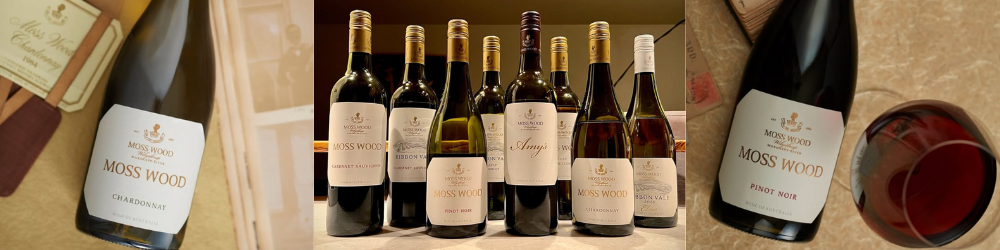
Moss Wood Pinot & Chardonnay Launch
The variety everyone told them not to plant, and they’ve done it for 50 years.
Pinot Noir was first planted at Moss Wood in 1973, and the inaugural 1977 vintage was released in 1979, making it one of the oldest Pinot Noir vineyards in Western Australia. Every year the same question comes up: why bother with Pinot Noir in Margaret River? In 2019 Pinot made up just 0.4% of the region’s total wine grape crush. Clare Mugford calls it the dark horse of the stable. Customers still remark, “Oh, I didn’t know you make Pinot?”
Three generations have now chased it. Bill and Sandra Pannell were Burgundy buffs from the beginning, the passion was carried on by Clare and Keith, and today it continues with Hugh and Tristan Mugford.
Sunday, August 30th
Hosted by The Mugfords
Lunch: 12–3pm | 13 wines and 4 courses | $215
Masterclass: 4–6pm | 13 wines & canapes | $130
Dinner: 6.30–9.30pm | 13 wines and 4 courses | $215
The Moss Wood Estate
& Vineyards
Founded in 1969 by Dr Bill and Sandra Pannell, Moss Wood is the second-oldest estate in Margaret River. The 1975 and 1976 Cabernets drew national and international acclaim and helped put the region on the world map.
The first vintage in 1973 was made in a tin shed using a small milk vat, and the Pannells picked, pressed and bottled by hand, Sandra carting cases to the railhead, Bill pruning and harvesting sometimes by moonlight. He later called the 1975 Cabernet “a little miracle”. The Cabernet sits in the Exceptional category of Langton’s Classification, and in 2019 Keith and Clare received the Jack Mann Memorial Medal. There is no cellar door; tastings and private visits are by appointment only.
The Moss Wood Pinot Noir Context:
Pinot Noir was first planted at Moss Wood in 1973, and the inaugural 1977 vintage was released in 1979. That makes it one of the oldest Pinot Noir vineyards in Western Australia, and one of the oldest in the country.
Every year the same question comes up. Why bother with Pinot Noir in Margaret River? In 2019 Pinot made up just 0.4% of the region’s total wine grape crush. The answer is simply that they have customers who love it and buy it every year. Clare Mugford calls it the dark horse of the stable, and says people still remark, “Oh, I didn’t know you make Pinot?”
Three generations have now chased it. Pinot was a favourite of Bill and Sandra Pannell from the beginning, both of them Burgundy buffs. The passion was carried on by Clare and Keith, and today it continues with Hugh and Tristan. Keith Mugford benchmarks Burgundy for inspiration rather than Australian, New Zealand or American Pinot, and Wilyabrup being warmer on average than the Yarra or Tasmania lets them make a richer, fuller-bodied wine than those regions.
Whole-bunch inclusion peaked around 60% in the 1988 and 1989 vintages and has since settled to 20 to 30%, after they found the spicy stalky character too dominant above 40%. One period detail worth keeping: the older Pinots were given a light filtration “through a silk stocking” before bottling.
Autrement, the Karridale gamble. In late 2023 Hugh Mugford caught wind of high-quality Pinot fruit available in Karridale, 60 kilometres south. Karridale is the southernmost significant winegrowing district in Margaret River and the coolest, where higher latitude and Southern Ocean influence give genuine freshness and structural precision. There is history to this restlessness: between 1991 and 2003 they made a Pemberton Pinot Noir, and from 2008 to 2010 a Mornington Peninsula wine. Both rewarding, both hard to manage during harvest at home.
Critics genuinely disagree on Autrement against the estate wine. One found it darker, fleshier and more fruit-forward than the flagship. Another found the estate Pinot richer and more intense than the Autrement. Tonight both are poured side by side, at constant vintage, so you can settle it yourself.
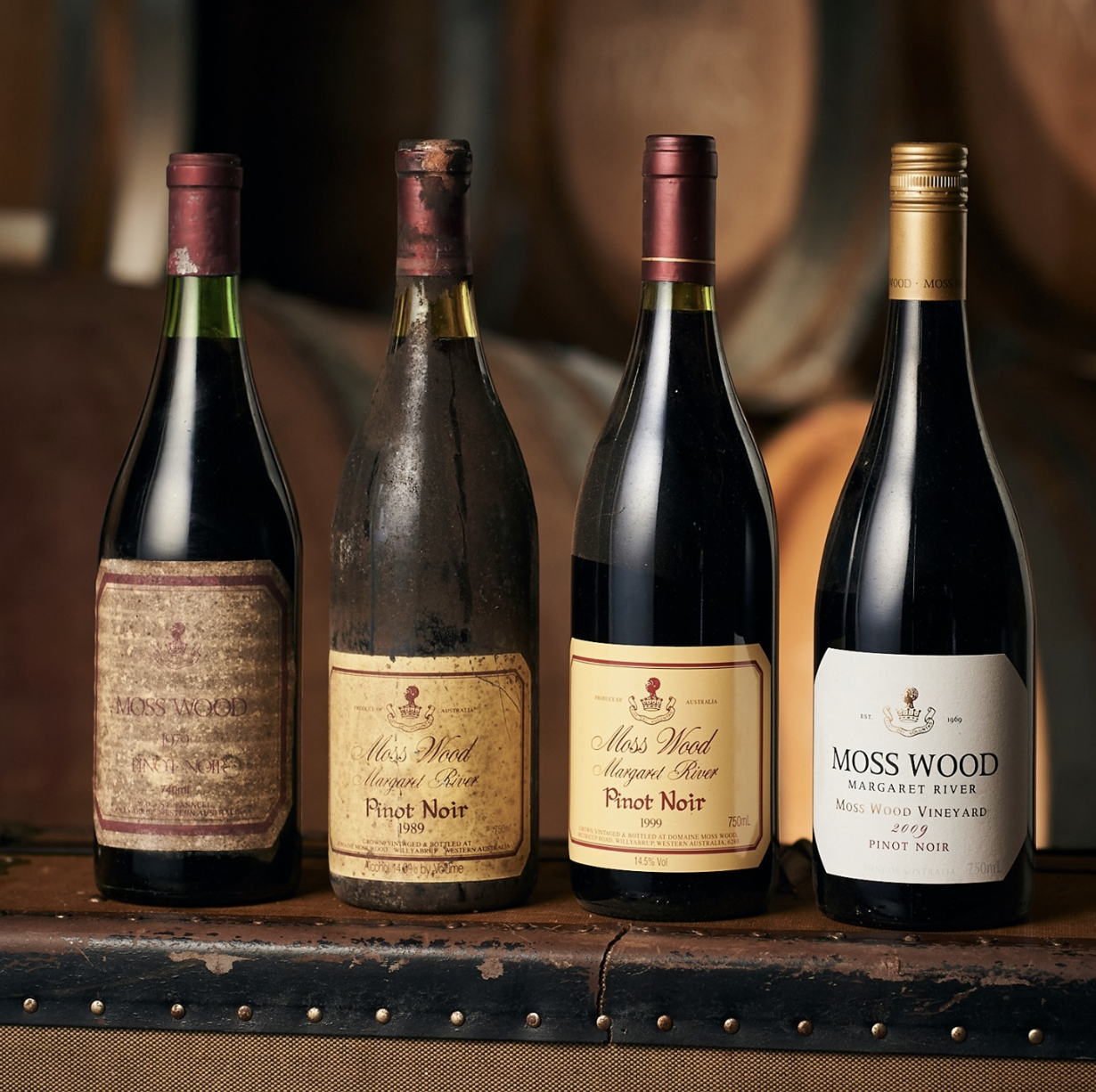
“Consistency and quality have underpinned our existence. Over the last 40+ years of making Moss Wood Pinot Noir, we have always believed in the quality of our wine and have been very happy to keep producing it. We can now point to vintages that have aged beautifully for more than 35 years.”
Moss Wood Pinot Noir:
2017 - 95 points Bob Campbell
2016 - 94 points James Halliday
2015 - 93 points Cameron Douglas
2014 - 92 points Josh Raynolds
2013 - 16 points Jancis Robinson
2012 - 92 points Josh Raynolds
The Moss Wood Chardonnay Context
It very nearly did not happen at all. Chardonnay was not planted at Moss Wood until 1976, when suitable cuttings finally became available in Western Australia. The first crop in 1979 was a few buckets, less than a barrel, so it was folded into the 1979 Semillon. The inaugural 1980 vintage yielded just two hogsheads. The following two crops were lost to adverse flowering, including hail, a rare frost and heavy winter rain. A full release returned in 1983, and it has been made every year since from the same vines.
For context, 1980 is also the year Leeuwin released the first Art Series. Moss Wood and Leeuwin together introduced what became the region’s most famous white wine.
The vines are Mendoza and Dijon clones, dry-grown and low-yielding. Whole-bunch pressed, barrel fermented, 18 months in 225 litre French oak with 50% new, and full malolactic. The house style is deliberately rich and full-bodied Wilyabrup, with no attempt to force a lean or mineral wine from the site. The 2017 won the Halliday Wine Companion 2020 Best Chardonnay award on 99 points.
Two Chardonnays, one recipe, 1.6 kilometres apart. The winemaking for the Ribbon Vale Chardonnay is virtually identical to Moss Wood’s. The real difference is harvest date, because the flavour profiles differ. Ribbon Vale, higher and cooler, gives bright citrus, white peach and grapefruit. Moss Wood leans to richer yellow peach, marmalade and cashew. Same vineyard techniques, same hands. The stylistic difference is site. Ribbon Vale is newer than people realise, too: 2021 was the first release under the label, though Chardonnays were made from that vineyard in 2000 and 2001. The 2025 is the fifth.
And the twenty-year claim. Moss Wood tells people to cellar their Chardonnay for twenty years. Almost nobody gets to test it. Their own guidance is bright primary fruit over the first five years, secondary toast, biscuit and butterscotch after ten, full maturity at twenty, and good drinking for at least a decade beyond. A 2012 at fourteen years sits exactly in that transition. It is poured after the 2025s, and the argument makes itself.

“Moss Wood focuses on the quality of its wines. It's part of everything that we do from the vineyard, through to the winery through to bottling wine.”
Moss Wood Chardonnay:
2018 - 97 points James Halliday, 17+/20 Jancis Robinson
2017 - 99 points James Halliday
2016 - 95 points James Halliday
2015 - 95 points Jane Faulkner
2014 - 93 points Josh Raynolds
2013 - 16.5/20 Jancis Robinson
2012 - 95 points, Bob Campbell
The Wine List
First Course
2023 Moss Wood Semillon
95 Points, Ray Jordan, rayjordanwine.com.au
Remains one of my favourite Moss Wood wines, and certainly one of my favourite semillons. This one from the great 2023 vintage is right up there with anything. A more pungent and intense semillon than previous years, probably a result of the vintage which produced such beautiful fruit intensity. Pure and driven with a lip-smacking acidity on the finish.
2026 Moss Wood Amy’s Blanc New Release
The inaugural release of Amy’s Cuvée Blanc, 90% Semillon and 10% Sauvignon Blanc, barrel fermented to add texture and built for youthful drinking.
Pancetta wrapped scallops, kaffir lime
Second Course
2025 Moss Wood Ribbon Vale Chardonnay
96 Points, Ray Jordan, rayjordanwine.com.au
This vineyard has really been turning out some quite marvellous wines in recent years. A beautiful, vibrant, lively chardonnay with that subtle degree of complexity complementing the natural fruit characters. Nutty lemon curd and deeper stone fruit on the nose, and on the palate such poise and restraint, with a deep palate intensity that extends effortlessly to a very long finish. Cellar 10 years.
2025 Moss Wood Chardonnay New Release
The estate wine, leaning to richer yellow peach, marmalade and cashew. Vines planted in 1976, Mendoza and Dijon clones, dry-grown and low-yielding. The winemaking is virtually identical to the Ribbon Vale; the difference is site and harvest date.
2012 Moss Wood Chardonnay
96 Points, James Halliday, Halliday Wine Companion
Chardonnay is one of Moss Wood’s great wines, close behind its Cabernet Sauvignon. There is a masterly interplay between stone fruit and citrus on the one hand, gently nutty French oak on the other. Fourteen years on, the twenty-year cellaring claim put to the test.
Seared salmon, shiitake, salsa verde
Third Course
2025 Moss Wood Autrement Pinot Noir New Release
Autrement means “in another way”. Fruit from Karridale, 60 kilometres south, the coolest and southernmost significant district in Margaret River, where higher latitude and Southern Ocean influence give freshness and structural precision.
2024 Moss Wood Autrement Pinot Noir
94 Points, Ray Jordan, Wine Pilot
Crafted from three different clones, contributing to its complexity. Bright crimson, with a nose dominated by primary red fruits such as strawberries and raspberries, and a faint hint of truffle. Structured with a bony thread typical of Pinot Noir, balanced by good fruit density and juiciness. In 2024, a hot season, the southern vineyards performed admirably.
2024 Moss Wood Pinot Noir New Release
No published critic review
Estate Wilyabrup fruit. Whole-bunch inclusion sits at 20 to 30%, settled there after peaking near 60% in the 1988 and 1989 vintages.
2023 Moss Wood Pinot Noir
97 Points, Ray Jordan, rayjordanwine.com.au
One of the finest pinot noirs yet from Moss Wood, delivering a wine of subtlety and power in equal measure. The vintage contributed vibrant colour, floral, cherry and raspberry aromatics, and a sublimely textured, finely integrated palate. Fine acidity and chalkiness complement the bright red fruits, capturing what pinot is all about. Cellar 10 years.
Chevre gnocchi, duck, curd, green peppercorn
Fourth Course
2023 Moss Wood Amy’s Cabernet Blend
95 Points, Ray Jordan, rayjordanwine.com.au
A blend of cabernet sauvignon, petit verdot, malbec and merlot. In a good year like this one, it offers some of the best value classy red wine going around. Plush red fruit of tremendous intensity. A firm core of tannin and oak holds it firm as the succulent fruit washes through. Such energy and vibrancy.
2023 Moss Wood Ribbon Vale Cabernet Sauvignon
96 Points, Ray Jordan, rayjordanwine.com.au
A superb release and possibly the best Ribbon Vale cabernet yet. An elegant, medium-bodied wine with purpose and drive, showing lifted red fruits and subtle leafiness on the nose. The palate is bright and energetic, with oak and tannins seamlessly integrated into the fruit to create precision and focus. Cellar 20 years.
2023 Moss Wood Cabernet Sauvignon
99 Points, Ray Jordan, rayjordanwine.com.au
I had great expectation that this wonderful vineyard from this exceptional vintage would produce something equally exceptional. Well, guess what? It has. There is nothing big and brutish here. This is elegance. This is precision. This is brilliance. High-end florals on the nose with traces of violet and red currant, and on the palate that beautiful restrained suppleness, with a deep and lingering intensity that persists through to an exceptionally long finish. I do not believe there has been a better Moss Wood. Cellar 30 years.
2016 Moss Wood Cabernet Sauvignon
99 Points, James Halliday, Halliday Wine Companion
Includes 5% petit verdot and 4% cabernet franc, hand-picked, destemmed, open-fermented, 14 days on skins, matured in French barriques, 18% new. A luscious, plush cabernet, its voluptuous palate trimmed by dry herbs and foresty notes. A great vintage maximised by thoughtful vinification. Ten years on, the mature counterpoint to the 2023.
Angus a la minute, mushrooms, Almond XO
To finish…
Espresso, macarons