

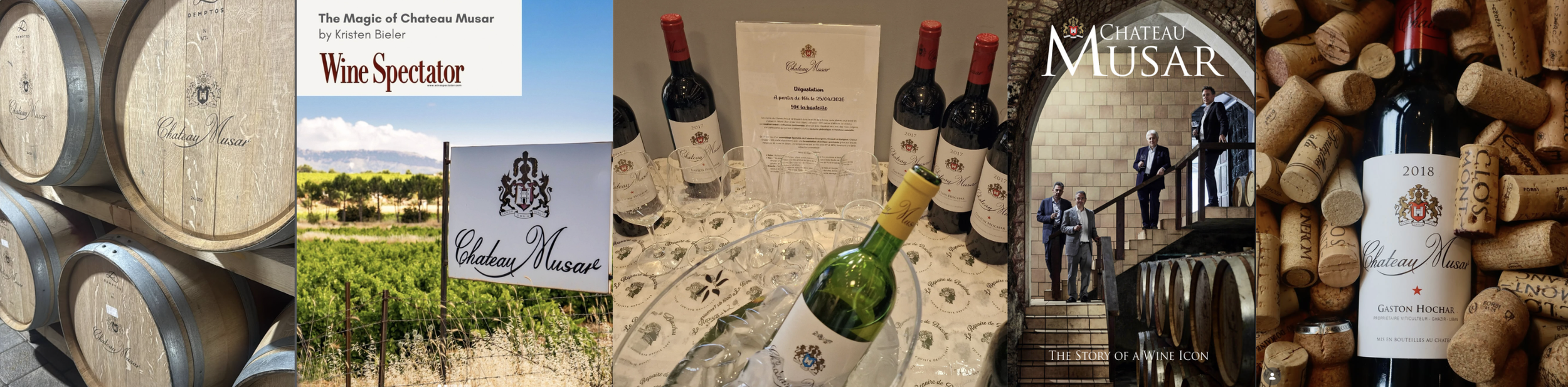
Chateau Musar presented by Ralph Hochar
Join us for an evening with Ralph Hochar, third-generation owner of Château Musar, the renowned family-owned winery from Lebanon.
Enjoy a special line-up of Château Musar wines, thoughtfully paired with a menu curated by Kate Lamont.
Friday, June 5th
Hosted by Ralph Hochar,
Masterclass: 5.30-7pm, 9 wines & canapes, $95
Dinner: 7.30pm, 9 wines and 3 courses, $180
The Critics on Chateau Musar
“When I ask people about Musar, I find they can recall where they were and who they were with when they last opened a bottle. Not many wines etch their mark in our taste memory so indelibly, and that is part of the Musar magic.”
Kristen Bieler, Wine Spectator, ‘The Magic of Chateau Musar’ (2016)
“Anyone who has enjoyed a bottle of Chateau Musar will know full well that this can be a wine of exceptional quality.”
Ken Gargett, Quill and Pad, ‘Chateau Musar: Sensational Iconic Wines From Lebanon’
“A wine that is improbable yet acclaimed; controversial yet authentic; bonkers yet brilliant…”
Richard Hemming MW, jancisrobinson.com
Chateau Musar - A Brief History
In 1930, at just 20 years old, Gaston Hochar founded Chateau Musar, inspired by Lebanon’s 6,000-year winemaking tradition and his travels in Bordeaux. His ‘wines with noblesse’ greatly impressed senior officers in the army following on from the French mandate of the 1920s. Major Ronald Barton, of Château Langoa-Barton, stationed in Lebanon during World War II became a great friend, strengthening the links between Chateau Musar and Bordeaux that remain to this day.
Serge Hochar, Gaston’s eldest son trained as a civil engineer, then decided to study oenology and with the encouragement of his father became a student of Emile Peynaud at the University of Oenology in Bordeaux. Having declared to his father “I want to make the wine my way, I want it to be known world-wide – and I want you to quit!” he became Chateau Musar’s winemaker in 1959, Gaston senior having graciously given way. He then spent 18 years perfecting the formula for Chateau Musar’s Red and was selected as Decanter Magazine’s first ‘Man of the Year’ in 1984 for his dedication to producing superb quality wines during Lebanon’s Civil War (1975-1990). Serge had two sons: Gaston and Marc. Both have studied engineering and worked in the banking sector. Gaston now manages the day-to-day running of the Chateau Musar winery, Marc its commercial aspects.
“My brother looked after the liquid, I look after the liquidity.” Like his brother Serge, Ronald Hochar was encouraged to participate at Musar from an early age: both grew up washing bottles and working at the winery before pursuing their separate paths within the business. Ronald would work 7am-5pm in Ghazir then work in the evenings at the Musar shop in Beirut. “We were paid 5 Lebanese pounds a day” says Ronald “I learned everything about selling from my father.” Having studied law, Ronald’s good-humoured contributions on the commercial and logistical fronts (against huge odds he kept Musar’s trucks running during the war) remain vital to the business. Ronald’s son Ralph worked with the on-trade sector in the United Kingdom until early 2017 and is now focusing on South East Asia from Chateau Musar’s UK office, while Ronald’s daughter Elsa produced a documentary film about Chateau Musar.
-
Knowing about Chateau Musar takes more than a sip or a glassful, however fascinating the taste of that wine might prove to be. To know Chateau Musar takes an understanding of terroir, of natural winemaking, of human nature and of history. All of these factors have a powerful influence over the way our wine appears in the glass – how it tastes, smells, lives, breathes and changes.
The story of Musar’s survival during the Lebanese civil war of 1975 to 1990 is well documented. It was a formative time for our wine and for its creator, Serge Hochar, who was only just beginning to trust his grapes (as he famously said) to ‘become what they wanted to be’. From 1975, he had no choice. They were harvested when the shelling paused; their transit to the winery took as long as avoiding militia check-points permitted (sometimes days), and winemaking could only happen when the coast road was clear and Serge could reach the winery.
The wine he made during this time had to find its own way past the delays and disruption caused by war, and miraculously it did so. Serge called his 1982 ‘a pure wine of war’. Eighty hectares of Hochar vineyards in the Beka’a Valley became the frontline for Israeli and Syrian tanks, the grapes only harvested by chance when a break in fighting allowed the loyal Bedouin grape-pickers to dash in and collect what they could. And yet the wine was to become an elegant, mellow red full of soft fruits and pomegranate charm – Andrew Jefford called it ‘typically Musar in its enigmatic simplicity/complexity’.
And yet the war is only a tiny part of the history that makes our wines what they are. Our Lebanese heritage, charted right the way back to Phoenician times, over 4,000 years ago, has had a dramatic influence on the way the vine is grown in our land. The Phoenicians were the first to cultivate the vine professionally and to trade wine internationally; they then taught the Greeks their oenological skills, and earned the admiration of the Romans for their links to market.
Of all the history that influences us, it is the Roman temple at Ba’albek that paved our way with the most authority. As Serge said: ‘This is the only serious temple erected to Bacchus [the god of wine] anywhere in the Roman world. And they put it here, in the Beka’a. Why? Because the Romans and Greeks, the Phoenicians and Minoans, and all peoples who came before them, all knew that the Beka’a is the spiritual home of wine.’
It is Serge’s trust for his wines, rooted in history and Lebanese terroir, that has led them to light the way for the natural wine movement. He would say: ‘My wines are natural. I am the one who makes them, but I do not interfere with nature. Taste them and listen to them and you will see!’ Serge enjoyed explaining this ‘No Touch Policy’ to anyone who would listen, and would eagerly show the incredible wines – both red and white – of complex longevity that were the result. He loved to travel, and it didn’t take him long to develop a worldwide support club for Chateau Musar, with followers eager every year to find out what his new vintage would bring.
That our wines – our vintages – are shaped by time is as clear today as it ever was. Take a look at the tasting notes for 15, 20 or 30-year old Chateau Musar and you will begin to understand the elegance that it develops as it evolves in bottle. This evolution is a vitally important part of Serge’s winemaking legacy, and that we, as a family, are determined to continue.
To know Chateau Musar as it truly should be known, takes an understanding of these and many other aspects of our lives in Lebanon that we talk about for the first time in a new book – Chateau Musar, the Story of a Wine Icon – published by the Académie du Vin Library. Our book brings together the people and events that have shaped our past, it highlights our vintages (red and white, from 1951 right up to our latest release) and celebrates everything we hope for the future.
-
Ralph Hochar is a third-generation member of the Hochar family behind Château Musar, one of Lebanon’s most celebrated and historic wineries. Founded in 1930 by Gaston Hochar in Ghazir, north of Beirut, Château Musar has become renowned for its distinctive, age-worthy wines, drawn from vineyards in Lebanon’s Bekaa Valley and shaped by the family’s deep connection to both ancient Lebanese winemaking and Bordeaux tradition.
As part of the new generation now carrying the estate forward, Ralph represents a remarkable family legacy, one defined by resilience, individuality and an unwavering belief in the character of Lebanese wine. Château Musar gained international recognition after the 1979 Bristol Wine Fair, and the late Serge Hochar, Ralph’s uncle, became one of the wine world’s great figures, celebrated for producing wines of extraordinary personality through times of conflict and uncertainty.
Today, Ralph continues to share the story of Château Musar with wine lovers around the world, offering a rare insight into a winery where tradition, patience and place are at the heart of every bottle. His visit is a special opportunity to experience not only the wines of Château Musar, but the history, philosophy and family spirit behind them.
-
Lebanon is one of the oldest wine-producing countries in the world, with records of wines being exported from the region to Egypt in 2686 BC. Lebanon is an ancient and stunning country dominated by two mountain ranges running the length of the country, in the middle of which lies the Bekaa Valley, where most of the farming takes place. Grape varieties in the region include Cinsault, Grenache, Carignan, Mourvedre, Syrah and in later years the Bordeaux varieties. For whites, Chardonnay, Muscat, Sauvignon Blanc and Semillon are the most planted. Lebanon is home to some world famous estates, in particular Chateau Musar.
About the region
Climate:
Mediterranean, with hot, dry summers and cool, wet winters
Soil:
Most Lebanese wine is produced from grapes grown in the Bekaa Valley, in clay or loam on limestone.
Key Varietals:
Carignan, Chardonnay, Cinsault, Grenache, Mourvedre, Muscat, Sauvignon Blanc, Semillon and Syrah
The Wine List
1st Bracket
2021 Château Musar Jeune White
The 2021 vintage is a blend of Viognier (40%), Vermentino (30%) and Chardonnay (30%). The Vermentino, native to Sardinia and Corsica and thus well suited to the Eastern Mediterranean climate, adds citrus, mineral and even a marine character. It is moderate in alcohol and combines well with the richer Chardonnay and fragrance of the aromatic Viognier. Flavours of pineapple, pear and apricots with some floral and herby notes of basil and thyme. There is a rich honeyed mouthfeel but at the same time it is vibrantly fresh with good acidity; deliciously drinkable lightly chilled, within two to three years from the harvest. To be enjoyed with Mediterranean and Middle Eastern cuisine, or as an aperitif.
Winemaker Tasting Notes
2018 Château Musar White
The beautifully textured palate of this creamy, amber-hued wine has nuanced lemon, tangerine, clove, honey, and gently oxidative flavors. Expect velvety tannins on the long, citrus-driven finish.
96 Points - Emily Saladino, Wine Enthusiast
2nd Bracket
2022 Château Musar Jeune Red
The 2022 vintage is a blend of Cinsault (50%), Syrah (35%) and Cabernet Sauvignon (15%). The latter two varieties stole the show this year with their deep colour and fragrance and the Cinsault, harvested on the 5th of September, was of consistently high quality.
A bright, vibrant ruby colour; the 2022 vintage is bursting with rich fruits. A traditional Musar Jeune nose with dark cherries and berries, it is all at once juicy and fresh with pomegranate, cranberries and herbal scents of violet and thyme. Dense and energetic on the palate with smooth tannins and lively acidity.
Winemaker Tasting Notes
2021 Château Musar Jeune Red
There are faint leather and spice notes amid the red fruits on the nose of this blend of Cinsault, Syrah and Cabernet Sauvignon from Bekaa Valley, Lebanon. The medium-bodied wine has a long, tannic finish that would be ideal with roast pork, lamb, and other hearty fare.
Emily Saladino, Wine Enthusiast
2020 Château Hochar Red
This deep garnet colored wine has aromas of cherry preserves, clove and orange zest. Clove carries onto the palate and is joined by black cherry, blackberry, violet and dark chocolate flavors wrapped in rugged tannins that fade into a slightly chewy finish.
92 Points - Mike DeSimone, Wine Enthusiast
3rd Bracket
2018 Château Musar
Full bottle 1,310 g. Famous blend of Cabernet Sauvignon, Cinsault and Carignan aged for six years before release.
Transparent bright ruby shading to a water-white rim. Super-exotic and warmly Mediterranean. Gamey but not bretty. The elements are very nicely melded and the nose, palate and (dry) finish all seem really fresh. Not sure it’s a very long distance runner. But I love the combination of ripeness and freshness. Couldn’t possibly be from anywhere other than Lebanon, maybe only from Ch Musar! Long and hugely pleasurable. Widens the range of flavours available in an admirable way.
17/20 Points - Jancis Robinson, JancisRobinson.com
2017 Château Musar
The 2017 Château Musar has a perfumed bouquet with well-defined plummy red fruit, fireside embers and pressed flower scents. A hint of VA in the background gives the aromatics a welcome kick. The palate is medium-bodied with fine tannins and well-judged acidity, harmonious, not powerful, yet full of flavor. A pleasing bitterness surfaces towards the finish, with moderate persistence and a residual white pepper tang lingering in the mouth. Very nice.
Neal Martin, Vinous (April 2023)
2010 Château Musar Museum Release
For a wine from a supposedly warm, dry vintage, this beautiful expression shows incredible precision, purity and focus. The 2010 has a compelling nose reminiscent of a youthful Cru Nebbiolo blended with 10 year old Grand Cru Cotes de Nuits Pinot Noir. There are wonderfully complex aromatic notes of cherry kirsch liquor, tar and roses, sweet earthy forest fruits, hints of balsamic, sun dried cherries, frais des Boisses and a subtle complexing note of freshly polished mahogany. The most intriguing aspect of this wine is it’s incredible focus, piercing palate freshness, medium bodied freshly weight allied with incredibly fine harmonious sweet chalky tannins. With the heavenly fruit purity of the finest Musar vintages married to the elegance of a more suave, feminine, seductive vintage, this 2010 is sure to be noted as one of the most lithe, elegant, attractive expressions from the Bekaa in more than a decade. Drink this beauty now or cellar for 15+ years.
95 Points - Greg Sherwood MW
2005 Château Musar Museum Release
People used to be snooty about wine from Lebanon, even though there have been vineyards there for 6,000 years. But its reputation spread and people came to love that rich, dark, spicy, leathery, peppery, perfumed wine with aptly, a hint of cedar. The Musar 2005 is already delicious with all the qualities listed above.
Simon Hoggart – The Spectator February 2012